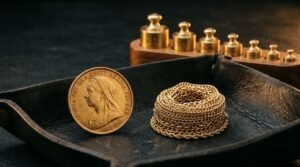
22K vs 24K vs 18K Gold: Which Should You Buy?
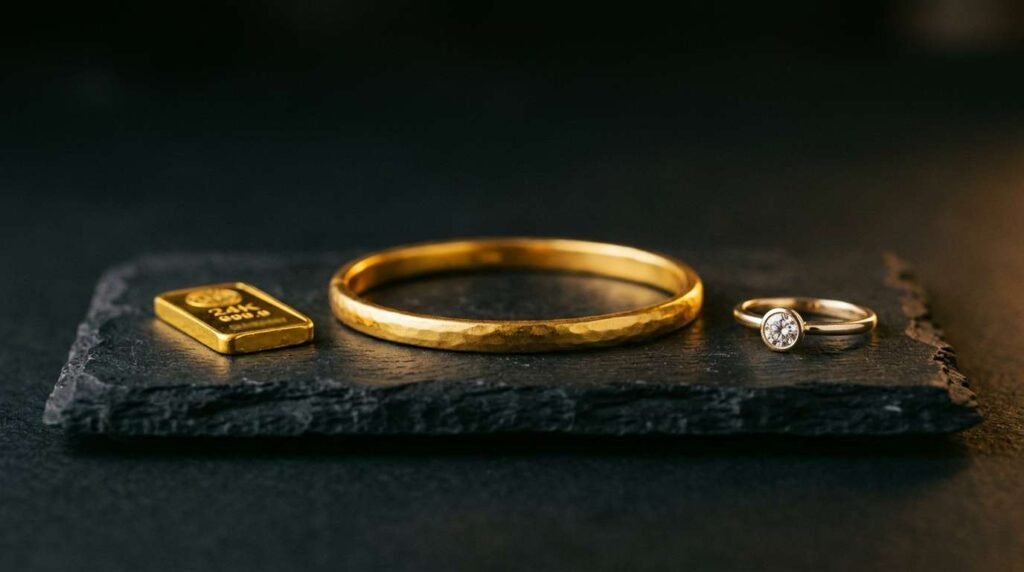
24K, 22K and 18K gold are all real gold. What changes is how much of the metal is pure gold, and that changes the colour, the strength, the price and how well a piece holds its value. Here is how to choose the right karat for jewellery you buy in Sri Lanka.
What karat actually means
Karat measures purity in 24 parts. 24K is all gold. 22K is 22 parts gold and 2 parts other metals, usually copper and silver, which make it harder. Jewellers often mark purity in parts per thousand, which is where the numbers stamped on jewellery come from.
| Karat | Gold content | Stamp | Colour | Hardness |
|---|---|---|---|---|
| 24K | 99.9% | 999 | Bright, deep yellow | Very soft |
| 22K | 91.6% | 916 | Rich, warm yellow | Soft |
| 21K | 87.5% | 875 | Warm yellow | Moderate |
| 18K | 75% | 750 | Lighter yellow, or white or rose | Firmer |
24K gold: for coins and bars, not everyday jewellery
24K gold is as pure as gold gets. It is the benchmark for the daily gold rate and the usual choice for coins and bars bought as savings. It is too soft for most jewellery: rings bend, chains stretch and claws cannot hold stones safely. If you want gold as an investment, 24K bullion is the most direct way. If you want to wear it, look at 22K.
22K gold: the Sri Lankan standard
22K, stamped 916, is the karat most Sri Lankan families buy for weddings, gifts and everyday wear. It keeps almost all the colour and value of pure gold while being just strong enough to wear. That is why bridal sets, chains, bangles and thaalis are traditionally made in 22K.
- Value: high gold content means old 22K jewellery holds most of its gold value when exchanged.
- Colour: the deep yellow that suits sarees and traditional dress.
- Trade-off: it scratches and bends more easily than 18K, so it rewards careful wear. Our 22K care guide shows how.
18K gold: for stones and modern designs
18K gold is 75% gold, which makes it noticeably harder. It is the standard in Europe and much of the world for diamond engagement rings, fine settings and white or rose gold, because the extra alloy lets jewellers change the colour and hold small stones securely. It costs less per gram than 22K, but contains less gold, so it is worth less when exchanged.
Which one should you choose?
| If you want… | Choose |
|---|---|
| Bridal jewellery, chains, bangles, thaali | 22K |
| Gold that holds its value for exchange later | 22K |
| Coins or bars as savings | 24K |
| White or rose gold | 18K |
| A ring with many small set stones, worn daily | 18K, or 22K with careful wear |
We make our collection in 916 certified 22K gold, and can discuss 18K for stone-heavy designs when a piece needs extra strength.
How karat affects price
The rate per gram scales with purity. If 24K gold is LKR 46,230 per gram, 22K is about LKR 42,378 and 18K about LKR 34,673, before making charges and stones. Our guide to how gold jewellery prices are calculated walks through a full example.
Frequently asked questions
Is 22K or 24K gold better for jewellery?
22K is better for jewellery. 24K is too soft to wear safely, while 22K keeps 91.6% gold content and is strong enough for rings, chains and bangles.
What does 916 mean on gold?
916 means the gold is 91.6% pure, which is 22 karat. It is the standard purity for Sri Lankan gold jewellery.
Is 18K gold real gold?
Yes. 18K gold is 75% pure gold mixed with other metals for strength and colour. It is the international standard for fine jewellery with stones.
Which karat is best for resale or exchange?
Higher karat gold returns more value because it contains more gold. 24K and 22K hold value best; 18K returns less per gram.
Not sure which karat suits your piece?
Tell us what you are looking for and how you will wear it, and we will recommend the right gold.