
How to Clean and Care for 22K Gold Jewellery
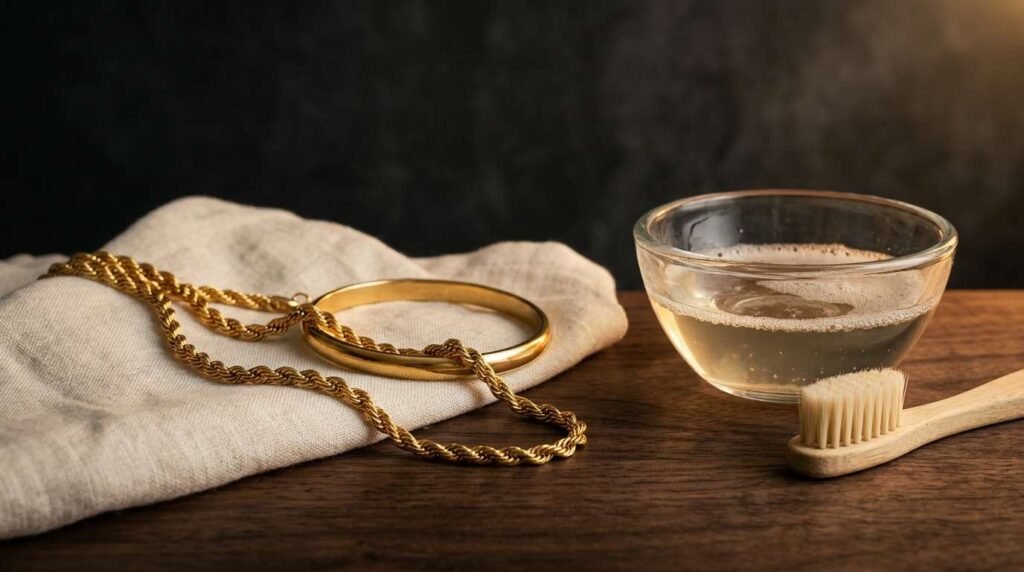
22K gold is 91.6% pure gold, which is why it has that deep, warm colour Sri Lankan families love. It is also why it needs a gentler touch than the 18K or 14K jewellery sold abroad. Here is how we clean, store and look after 22K pieces at our Negombo workbench, and how you can do the same at home.
Why 22K gold needs different care
Pure gold does not rust or tarnish. The small amount of copper and silver mixed into 22K gold gives it just enough strength to hold a shape, but it stays softer than lower karats. That has three practical effects:
- It scratches more easily. A 22K ring worn every day picks up fine marks faster than an 18K one, especially on the palm side.
- It can bend. Thin chains, open bangles and delicate earring hooks can lose their shape if they are pulled or knocked.
- Settings need checking. Claws and bezels holding diamonds or sapphires are softer, so a stone can loosen over the years if nobody checks it.
None of this means 22K is fragile. Families in Sri Lanka pass 22K pieces down for generations. It just rewards a little routine care.
How to clean 22K gold at home
For plain gold pieces, such as chains, bangles, signet rings and pendants without stones, this is all you need:
- Mix warm water with a few drops of mild dish soap in a small bowl. Avoid anything with bleach, ammonia or strong fragrance.
- Soak the piece for 10 to 15 minutes. This loosens the film from skin oils, lotion and dust that makes gold look dull.
- Brush gently with a soft baby toothbrush, paying attention to links, engraving and the back of pendants where dirt collects.
- Rinse under lukewarm running water. Close the sink drain first, or rinse over a bowl.
- Pat dry with a soft, lint-free cloth, then let it air-dry completely before you put it away.
Skip the toothpaste. It is a common home tip, but toothpaste is mildly abrasive and leaves fine scratches on soft 22K gold. The same goes for baking soda pastes and paper tissues.
Pieces with stones need extra care
Stone-set jewellery can still be cleaned with the soap-and-water method, but keep these points in mind:
- Diamonds and sapphires are hard and handle a soak well. Brush gently behind the stone, where soap and lotion build up and dull the sparkle.
- Black onyx, coral and pearls are softer and porous. Wipe them with a damp cloth instead of soaking.
- Valampuri conch and other organic materials should never be soaked or exposed to chemicals. A dry, soft cloth is enough.
- Avoid ultrasonic cleaners at home. The vibration can loosen stones in older or softer settings. If a piece needs a deep clean, bring it to a jeweller.
What to keep your gold away from
Most damage happens during everyday life, not cleaning. Make jewellery the last thing you put on and the first thing you take off:
| Situation | Why it matters | What to do |
|---|---|---|
| Swimming pools | Chlorine can weaken gold alloys and solder joints over time | Take jewellery off before swimming |
| Sea bathing at Negombo beach | Salt and sand scratch and get trapped in links | Leave pieces at the hotel or home, or rinse in fresh water afterwards |
| Perfume, hairspray, lotion | Leaves a dull film and builds up behind stones | Apply first, let it dry, then put on jewellery |
| Housework, gardening, the gym | Knocks and abrasion, plus cleaning chemicals | Remove rings and bracelets first |
| Sleeping | Chains tangle and thin pieces bend | Take off necklaces and earrings at night |
How to store 22K gold
Because 22K is soft, the biggest risk in storage is pieces rubbing against each other. Store each piece separately in a soft pouch or a lined box with compartments. Fasten chains before storing so they do not knot. Keep diamond-set pieces apart from plain gold, since diamonds will scratch anything they touch.
Sri Lanka’s humidity does not harm gold itself, but it can tarnish silver pieces and the clasps on some chains. A couple of silica gel sachets in your jewellery box help, and they cost almost nothing.
When to bring a piece in
Have your everyday pieces checked by a jeweller once or twice a year, and straight away if you notice any of these:
- A stone that moves or rattles when you tap the piece gently
- A claw that is bent, flattened or catching on clothes
- A clasp that opens too easily
- Thinning on the back of a ring band from years of wear
- A bangle or ring that has gone out of round
A professional polish removes a microscopic layer of gold each time, so it is best kept for when a piece genuinely needs it, not done every month. For everyday shine, the soap-and-water method above is enough.
You can browse our 22K collection to see how pieces like the Kandyan Link Bracelet and the Moon Ring are finished, or book a consultation to talk through a piece you already own.
Frequently asked questions
Can I wear 22K gold every day?
Yes. Many people in Sri Lanka wear 22K chains, bangles and rings every day. Expect fine surface scratches over time, which is normal for soft, high-purity gold, and take pieces off for swimming, the gym and housework.
Does 22K gold tarnish?
Not in the way silver does. Gold itself does not tarnish. 22K pieces can look dull from skin oils, lotion and dust, and a soak in warm soapy water brings the colour back.
Can I clean gold with toothpaste?
We do not recommend it. Toothpaste is mildly abrasive and can leave fine scratches on soft 22K gold. Use warm water, mild dish soap and a soft toothbrush instead.
How often should I get my jewellery professionally checked?
Once or twice a year for pieces you wear often, and straight away if a stone feels loose or a clasp is weak. Pieces worn only for weddings and festivals can be checked every few years.
Is it safe to wear gold jewellery in the sea?
Salt water will not harm the gold, but sand scratches it and strong waves can pull rings and chains off. It is safest to leave jewellery at home or at your hotel when you swim.
Bring your gold to Greens Road
Visit us at No.05 Greens Rd, Negombo, to have a piece checked, or message us on WhatsApp to ask about a new piece made to order.