
How Gold Jewellery Prices Are Calculated in Sri Lanka
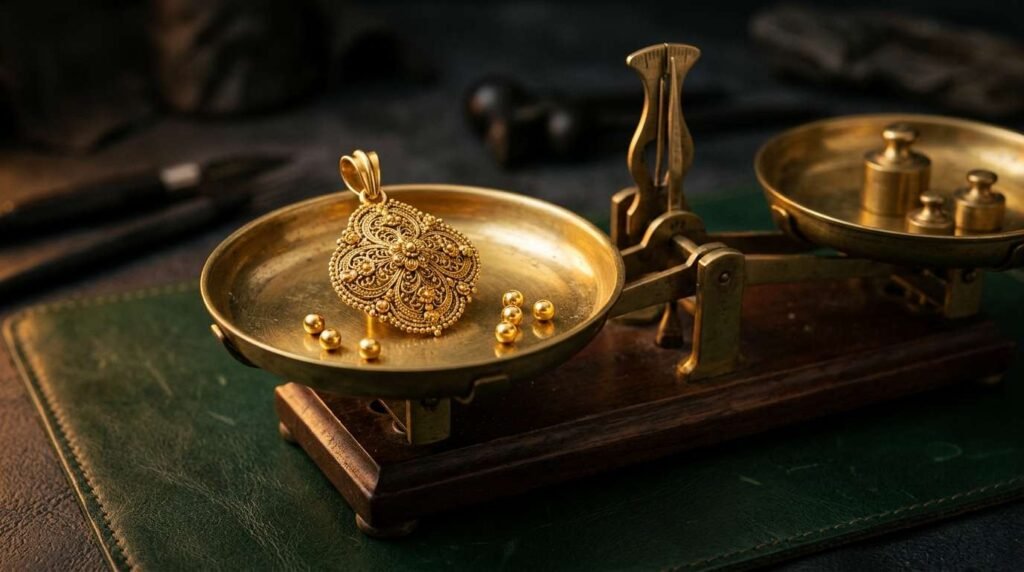
Two gold necklaces can look almost identical and still be priced tens of thousands of rupees apart. The difference is almost always in four numbers: the day’s gold rate, the weight, the making and wastage charges, and the stones. Once you know how they fit together, you can compare any jeweller’s price in Sri Lanka with confidence.
The formula in one line
Price = (gold rate per gram × weight) + making and wastage + stones
Every honest gold price in Sri Lanka is built this way, even if the jeweller only shows you the total. Here is what each part means.
1. The gold rate per gram
The gold rate moves every day with the world gold price and the rupee exchange rate. Jewellers usually quote two rates:
- 24K is 99.9% pure gold, the rate for bullion and coins.
- 22K is 91.6% pure gold, the standard for Sri Lankan jewellery. Its rate is the 24K rate multiplied by 22/24.
You will also hear prices quoted per pawn (also called a sovereign or pavan), which is 8 grams. If 22K gold is LKR 42,378 per gram, one pawn of 22K is about LKR 339,000.
Because the rate changes daily, the price of the same piece can change from one week to the next. A fair jeweller tells you which day’s rate a quote is based on.
2. The weight
Weight is the biggest driver of price for plain gold jewellery. A thin 22K chain might weigh 4 grams, a bridal necklace 30 grams or more. Always ask for the weight in grams, and check that it is the gold weight, not the total weight including stones. Stones are priced separately, so counting them as gold would overcharge you.
3. Making and wastage charges
Gold has to be melted, shaped, soldered, set and polished by hand, and a little metal is lost along the way. Jewellers cover this with two charges, usually as a percentage of the gold value:
- Making charge pays for the craftsmanship. Intricate work such as filigree, Kandyan designs or hand-engraving costs more than a plain band.
- Wastage covers the gold lost during melting, filing and polishing.
Percentages vary between jewellers and between designs, which is why two pieces of the same weight can have different prices. Some shops combine the two into a single figure. Either way, it is reasonable to ask what percentage you are paying.
4. The stones
Diamonds, sapphires and other gems are priced separately from the gold. Their value depends on the type of stone, carat weight, colour, clarity, cut and whether they are natural, treated or lab-grown. A small line of pavé diamonds might add tens of thousands of rupees, while a single fine Ceylon sapphire can cost more than the gold around it.
Ask for the stone details in writing: type, approximate carat weight, and whether a certificate comes with it.
A worked example
Here is how the price of our Ratnapura Hoop Earrings was built, using the 22K rate of LKR 42,378 per gram from late September 2026:
| Part | Calculation | Amount (LKR) |
|---|---|---|
| Gold value | 42,378 × 5 g | 211,888 |
| Making and wastage | 20% of gold value | 42,378 |
| Stones | Pavé diamonds | 79,000 |
| Total | Rounded to the nearest 500 | 333,500 |
Every product on our site shows this breakdown under the price, updated with the current gold rate, so you can see exactly what you are paying for.
Five questions to ask any jeweller
- What is the gold weight in grams? Not including stones.
- Which day’s gold rate is this based on? And will the price change before I collect it?
- What percentage is the making and wastage charge?
- What are the stones, and is there a certificate?
- How is purity certified? 22K gold should be marked 916 and backed by a certificate.
A jeweller who answers all five clearly is one you can trust. If the answers are vague, compare elsewhere before you buy.
Why prices differ between shops
If two quotes for similar pieces are far apart, the reason is usually one of these: a different gold rate date, a heavier or lighter piece, a higher making charge for more detailed work, or different stones. Comparing only the final price hides all of that. Comparing the breakdown shows you whether you are getting more gold, better craftsmanship or better stones for your money.
You can see the full breakdown on every piece in our 22K collection, and our guide to caring for 22K gold explains how to keep a piece looking new once you own it.
Frequently asked questions
How is the price of gold jewellery calculated in Sri Lanka?
It is the day’s gold rate per gram multiplied by the gold weight, plus making and wastage charges for the craftsmanship, plus the value of any stones. Ask your jeweller for each part separately.
What is the 22K gold rate based on?
22K gold is 91.6% pure, so its rate is the 24K rate multiplied by 22/24. Both rates change daily with the world gold price and the rupee exchange rate.
How many grams is one pawn of gold?
One pawn, also called a sovereign or pavan, is 8 grams. Gold prices in Sri Lanka are often quoted per pawn as well as per gram.
What is a fair making charge?
It depends on the design. Plain chains and bands carry lower making charges than detailed, hand-finished or stone-set pieces. Ask for the percentage and compare like with like.
Why did the price change since my last visit?
The gold rate changes every day. If the rate rises, the gold value of the same piece rises with it. Ask which day’s rate a quote is based on, and how long the price is held.
Ask for a full breakdown
Send us a photo or a product name on WhatsApp and we will reply with today’s gold rate, the weight and every charge, line by line.